Career Goal Setting Guide for Indian Students: Strategies & Examples
In today’s competitive world, clear career goal setting is crucial for students to set early on in their academic journey. By defining their career aspirations, students can chart a path toward success and make informed decisions regarding their education, internships, and job opportunities.
This blog aims to provide practical strategies and examples for Indian students, encompassing school, college, and graduate levels, to help them set meaningful career goals.
Section 1: Understanding the Importance of Career Goal Setting
The significance of setting career goals in the Indian context
In India, where there is fierce competition for limited job opportunities, setting career goals becomes crucial for students to stand out from the crowd. It helps them gain clarity about their desired professions and align their educational pursuits accordingly.
Benefits of setting career goals
Setting career goals offers several benefits, including providing a sense of direction, motivation, and focus. It helps students make informed decisions, enhances their self-confidence, and increases the likelihood of achieving professional success.
Challenges faced by Indian students
when setting career goals Indian students often face challenges such as societal pressure to pursue conventional career paths, limited exposure to diverse career options, and the need to balance academic expectations with personal interests and aspirations.
Developing a growth mindset for career planning
Developing a growth mindset involves cultivating a belief in one’s ability to learn, adapt, and overcome challenges. It helps students embrace opportunities for personal and professional development, making their career goal-setting process more effective.
Section 2: Exploring Career Options and Identifying Interests
Researching various career paths
Students should conduct thorough research to explore different career paths available to them. They can utilize online resources, career websites, industry reports, and engage in informational interviews to gather valuable insights.
Assessing Personality, interests, and values
Understanding one’s Personality, interests, and values is crucial for aligning career goals with personal aspirations. Students can use self-assessment tools, reflect on their experiences, and seek feedback from mentors or career counselors.
Exploring career opportunities in different industries in India
India offers a diverse range of industries and sectors. Students should explore career opportunities in sectors such as IT, healthcare, finance, hospitality, media, and engineering, considering factors like market demand, growth potential, and personal preferences.
Seeking guidance from career counselors and mentors
Career counselors and mentors play a vital role in guiding students through the career goal-setting process. They can provide valuable advice, share industry insights, and help students understand their strengths and weaknesses.
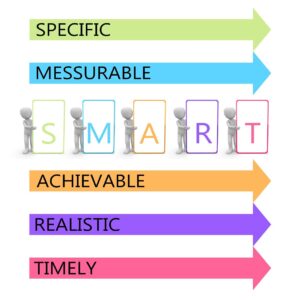
The SMART framework is a popular goal-setting technique. Students should ensure that their career goals are Specific, Measurable, Achievable, Relevant, and Time-bound. This framework adds clarity and structure to their goals.
Example of a SMART career goal for a school student :
A SMART career goal for a school student could be: “By the end of high school, I will participate in a career exploration program and gain exposure to at least three different industries through job shadowing or internships.”
Example of a SMART career goal for a college student :
A SMART career goal for a college student could be: “Within the next two years, I will complete a relevant internship in my field of interest, acquire industry certifications, and maintain a minimum GPA of 8.5 to enhance my chances of securing a job in the financial sector.”
Example of a SMART career goal for a graduate student :
A SMART career goal for a graduate student could be: “Within the next three years, I will complete a Master’s degree in Data Science, gain practical experience through internships, and network with industry professionals to secure a job in a reputed analytics firm.”
Strategies for breaking down long-term goals into short-term objectives
To achieve long-term career goals, students should break them down into smaller, manageable short-term objectives. They can create a timeline, identify specific action steps, and regularly review and adjust their goals as needed.
Section 4: Creating an Action Plan
Setting short-term milestones and deadlines
Students should set short-term milestones and deadlines to track their progress. These can include completing specific courses, participating in relevant workshops, or attending career fairs to expand their network.
Identifying the necessary skills and qualifications
Identifying the skills and qualifications required for their desired careers helps students plan their educational and professional development. They should research job descriptions, and industry trends, and consult with professionals to understand the key competencies needed.
Researching educational programs and courses
Students should explore educational programs and courses that align with their career goals. They can consider factors such as reputation, curriculum, faculty expertise, industry collaborations, and placement records while selecting suitable programs.
Seeking internships and part-time opportunities
Internships and part-time jobs provide students with valuable industry exposure and practical experience. They should actively search for internships, engage in networking events, and leverage online platforms to find relevant opportunities.
Building a professional network
Networking is essential for career growth. Students should attend industry events, join professional associations, utilize social media platforms like LinkedIn, and connect with professionals in their desired fields. Building relationships can lead to mentorship, job referrals, and valuable insights.
Section 5: Flexibility and Adaptability in Career Planning
Recognizing the evolving job market in India
Students must stay updated on the changing dynamics of the job market in India. They should be aware of emerging industries, evolving skill requirements, and technological advancements to align their career goals with market demands.
Embracing interdisciplinary opportunities
Interdisciplinary opportunities offer a broader skill set and increase employability. Students should be open to pursuing interdisciplinary courses, collaborating with peers from different fields, and exploring the intersection of multiple disciplines.
Staying open to alternative career paths
It is essential for students to remain open to alternative career paths. Sometimes, opportunities arise outside one’s initial plan, and students should be willing to explore and adapt to new possibilities that may align better with their skills and interests.
Incorporating personal growth and well-being in career planning
Students should prioritize personal growth and well-being alongside their career goals. Balancing academics, hobbies, self-care, and maintaining a healthy work-life balance contributes to long-term success and fulfillment.
Conclusion:
Setting career goals is a vital aspect of a student’s educational journey, enabling them to align their aspirations with a focused action plan. By understanding the importance of career goal setting, exploring various career options, and following the SMART goal framework, Indian students can take proactive steps towards their desired professions. Creating an action plan and remaining flexible in career planning will further enhance their chances of success. Remember, career goals may evolve over time, and it is essential to adapt and embrace new opportunities as they arise.
By implementing the strategies discussed in this blog, Indian students can navigate their career paths with clarity, confidence, and purpose, ultimately realizing their full potential in the professional world. Remember, success comes to those who plan.